Terahara
Bullet TrainTerahara is a former underworld power whose assassination and the breakup of his organization, Maiden, form a turning point in the criminal history recalled throughout the novel. He is never presented directly; instead, competing stories about his authority, his death, and the people connected to him make his absent presence a measure of how the underworld has changed.
Position and Reputation
Terahara is described as the major figure who once steered the underworld. The Wolf claims that Terahara gave him his nickname, a story Nanao regards with skepticism: Terahara was occupied with directing the criminal world, and it seems unlikely that he would spend time inventing a nickname for a minor operator. The Wolf nevertheless presents the account proudly. The episode captures the distance between Terahara’s scale of influence and the small-time figures who invoke his name to lend weight to their own stories.
The Wolf also boasts that he killed the Whale, a specialist whose work was made to resemble suicide. The Whale had abruptly disappeared, prompting competing rumors: that someone in the business had killed him, that he had died in an accident, or that a politician with a grudge had bought his body. Whatever happened, the account stresses that the Wolf was not considered a credible choice for such a major assignment; he was usually hired for lesser support work. Terahara’s world is thus recalled not as a neat hierarchy with reliable information, but as a milieu where reputation, rumor, and self-serving claims circulate together.
Maiden and the Breakup
Maiden was Terahara’s organization. Lemon recalls that it fell apart roughly six or seven years before the conversation, after both Terahara and his child died. The operation was then divided. This account joins personal loss to political change: Terahara’s death did not simply remove a single boss but coincided with the dispersal of the organization built around him.
In the aftermath, one father anticipated that conditions would become dangerous and left town for Morioka. Lemon characterizes the move as sensible, though the exchange does not establish that person’s precise connection to Terahara. The detail gives the collapse a practical consequence beyond the criminal organization itself: people who expected violence or instability responded by relocating. Terahara’s fall therefore marks a period when old affiliations no longer offered security and the shape of authority was changing.
Assassination and Its Aftermath
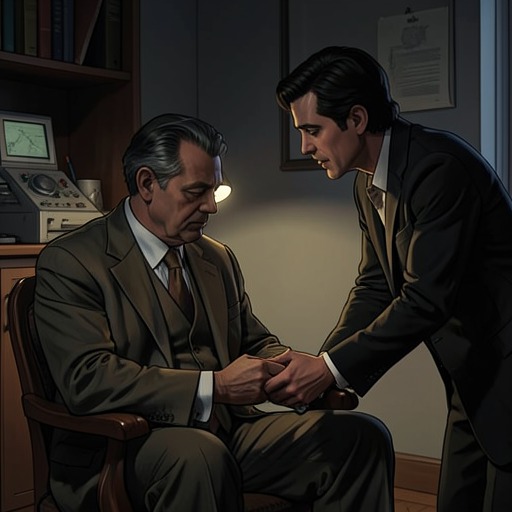
The account of Terahara’s death identifies the Hornet as the assassin. The Hornet made a name for himself six years earlier by entering Terahara’s offices and killing the underworld boss with a poison needle. The speed with which this killing established the Hornet’s reputation contrasts with Terahara’s long-standing power: the death of the man at the center of the old order becomes the act that announces a new name in the business.
Rumors held that the Hornet might actually be two people working together. The uncertainty does not obscure the core of the story—Terahara was poisoned—but it leaves the identity and operation of the killer partly unsettled. Later, Nanao hears an instructor describe a dangerous man and his son: the father was poisoned, while the son was hit by a car. Nanao recognizes Terahara’s name and supplies the connection himself. The accounts confirm the different circumstances of their deaths without establishing that the Hornet was responsible for the son’s death.
A Name in Later Conflicts
Terahara’s place in the underworld persists through the people who came after him. In a conversation with Kimura, the Prince treats Terahara as the predecessor to Minegishi, asking about the earlier crime boss as if recalling a figure from another era. Kimura had never met Minegishi or been hired by him directly, but he understood that work he performed in the past could often be traced to Minegishi’s organization through subcontracting. The exchange places Terahara within a succession of criminal powers whose reach shaped the work available to others.
The Prince also says that someone had reported him to Minegishi. Kimura is initially surprised, then understands how the Prince is connected to Minegishi. This does not establish a direct relationship between the Prince and Terahara; instead, it shows the continuing importance of the world Terahara once helped govern, as later figures navigate its networks and inherit its conflicts.
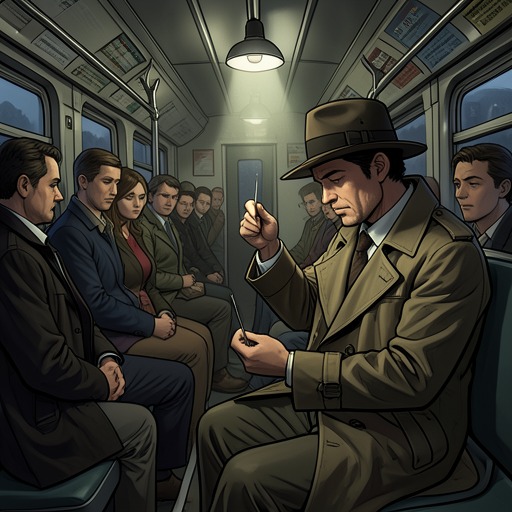
Terahara’s name returns again when a man on the train is understood to be seeking revenge on the Hornet. The suspicion rests partly on the man’s association with Terahara: he had been one of Terahara’s underlings and boasted that the boss favored him. The connection is presented as circumstantial rather than proof of the man’s target, but it gives the old assassination a continuing reach. Terahara remains consequential not through present action, but through the loyalties, claims, and vendettas that survive the fall of Maiden.